FAR-A-DAY, the French trailer that adds 300 km of range

- Published on 25/11/2025 12:43
- Modified on 26/11/2025 10:36
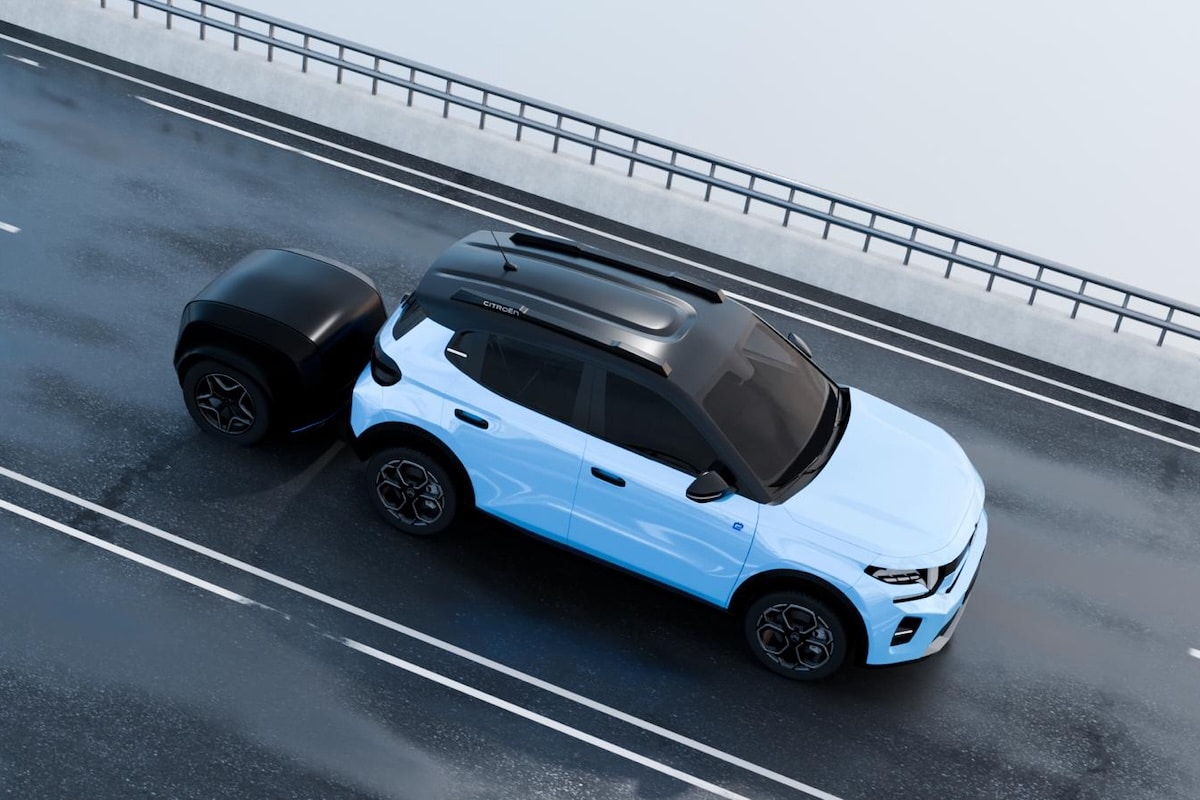
The French startup FAR-A-DAY, specialized in e-mobility, will launch a “battery” trailer on highways in 2026.
Electric mobility is advancing but still faces a persistent paradox: affordable cars (under 30,000 euros even today) offer limited range on the highway, while long-distance models remain expensive, heavy, and energy-consuming.
The young French startup FAR-A-DAY, officially launched in November 2025, claims to have found a solution to break this structural barrier. Its name, a clever nod to Michael Faraday, not to mention the double meaning “far-a-day” (“go far in one day”), already reflects its ambition: to allow drivers to travel long distances without wasting time stuck at a charging station.
Its idea: a removable and mobile external battery capable of adding 60 kWh, or more than 300 km of real range, in just two minutes. A promise that, if confirmed, could profoundly change the way electric vehicles are used.

One of the most interesting points of the concept is its relevance for small electric cars, particularly those with fast charging speeds capped around 30 to 50 kW. These models also suffer the most on highways: an e-208, for instance, needs nearly 30 minutes to recover 100 to 150 km of range, forcing its driver to take multiple breaks on a long trip. The mobile battery from FAR-A-DAY reverses this logic: instead of waiting for the car to charge, it’s the range that comes to the vehicle.
You might be interestedin this article:
Too good to be true?
The prototype, similar to a compact 500 kg trailer, attaches to the rear of the vehicle via a specific hitch that must be installed in advance. The founders highlight the decisive advantage of an effortless installation, where fast charging still requires prolonged stops of 20 to 40 minutes depending on the models. The first prototypes have accumulated 200,000 kilometers of testing, a significant volume that proves the concept is viable.
However, FAR-A-DAY is not just offering a product: the startup plans a network of dedicated stations, installed at highway entrances and partly powered by photovoltaic panels. After reservation via an app, the driver retrieves their battery, attaches it in 2 minutes, and then drops it off further along or at their destination. The first corridor targeted will connect Paris to Bordeaux as early as 2026, followed by the opening of 30 stations in 2027, which are meant to cover 80% of long-distance trips in France.

The service also aims to revitalize the used car market, where aging batteries suffer from a natural degradation of performance over long distances. For these vehicles, the promise of “instantly regaining” 300 km of range is particularly attractive.
And what about the price of FAR-A-DAY?
“The French no longer need to buy expensive models to travel long distances electrically,” asserts Arthur Darde, CEO, advocating for the idea of dissociating range from purchase price. The approach also aligns with a logic of frugality: a small battery for daily commuting, a temporary extension for weekends or vacations.

Despite its appeal, the concept raises several essential questions. The first concerns the real compatibility with the entire electric fleet: each vehicle has its own battery architecture, communication protocols, and internal safety measures.
There are also concerns related to road behavior: an additional 500 kg on a rear overhang is not negligible, even though FAR-A-DAY asserts it has patented a system to allow transparent driving, including in reverse. Independent tests will be essential to verify the impact on stability, consumption, and braking.
Finally, the success of the model will depend on the speed of station deployment and pricing. FAR-A-DAY promises service prices equivalent to those of a charging station on the highway, with less waiting time. The argument is appealing, to be sure. As for the installation of the hitch, the startup promises it will be free and quick for early adopters.
All of this will need to be verified in 2026, when the service is truly deployed.
ALSO READ: October 2025: Tesla sales collapse in Europe
This page is translated from the original post "FAR-A-DAY, la remorque française qui rajoute 300 km d’autonomie" in French.
We also suggestthese articles:
Also read
Recent articles