
TGV Bordeaux-Lyon “Without Passing Through Paris”: The Latest Scam

- Published on 10/11/2025 19:43
- Modified on 10/11/2025 19:46
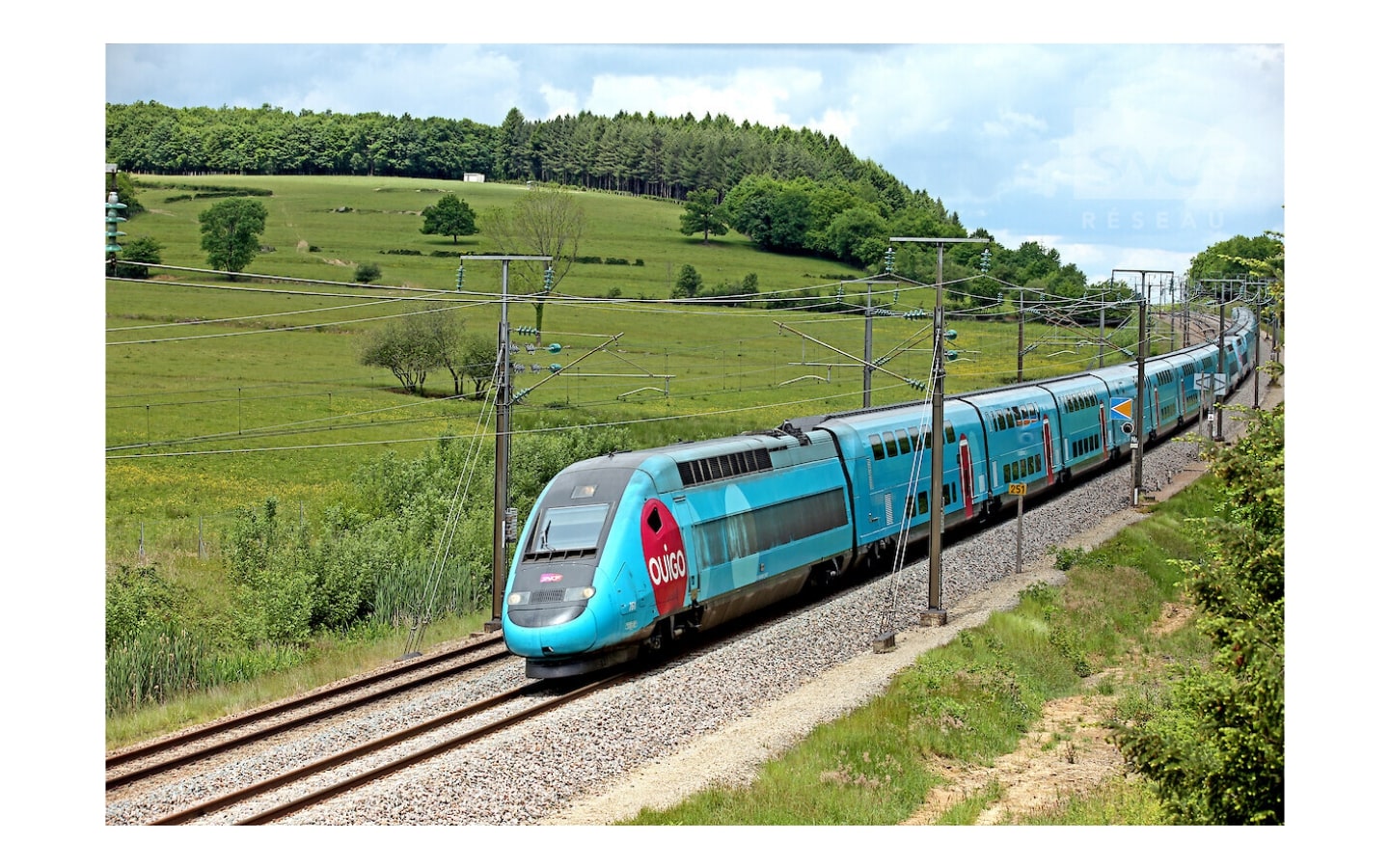
The regional press welcomes the high-speed connection project between Bordeaux and Lyon without passing through Paris by 2027. An insult!
Our era is no longer far from semantic manipulation. As long as the consumer, somewhat gullible (to put it politely), takes the bait, the rest matters little.
Rumors suggest a high-speed link project between Bordeaux and Lyon “without passing through Paris” from the SNCF for 2027. An alluring piece of information, which gives the impression that finally, France would have a transverse rail line between two major regional metropolitan areas of respectively 843,000 and 1.4 million inhabitants. Except the proposed route would use several sections of the LGV Atlantique passing through Poitiers, Tours and… Massy, before heading down to Lyon. In other words, via the Parisian outskirts. All without building a true direct line for a trip that would take 3 hours and 40 minutes. The only consolation: no change of station or train in Paris.
You might be interestedin this article:

Result: a north-arc-shaped route, longer, more energy-consuming and paradoxically still centered around the Paris region. Raises the question: is it really a railway decentralization project, or just a communication trick to mask the structural lack of ambition in the French network?

Why isn’t there a real Bordeaux–Lyon line?
The answer comes down to three words: economy, geology, and politics. Building a new LGV costs several tens of billions of euros. For a transverse line to be profitable, there must be a sufficient flow of travelers between the concerned metropolitan areas. However, in the historical logic of the French network, the main flows converge towards Paris. The radial model of the TGV, conceived since the 1980s, favors Paris–province relations, not interregional connections. Result: Bordeaux-Lyon is currently about 5 hours by train, with demand judged too low to justify building a new line. This is a windfall for commercial aviation, which offers links under an hour with a direct distance of only 440 km to cover.
Geology is then a crucial aspect. Between Bordeaux and Lyon, the Massif Central rises as a natural obstacle. The terrains of Limousin and Auvergne complicate any direct crossing. Where high-speed lines prefer plains, central France is an engineering puzzle. Tunnels, viaducts, and protected zones increase costs and extend delays.
Finally, there is the political dimension. France has always organized its territory around Paris, the political, economic, and railway capital. From the Second Empire to François Mitterrand’s major projects, the TGV network was designed as a star centered on the capital. Each transverse line project, whether the famous “Basque Y” or the southern transverse Bordeaux-Toulouse-Montpellier-Marseille, has been postponed or fragmented due to lack of national will. The regions, now responsible for transport, do not have the means alone to finance an LGV.
The Mirage of Territorial Rebalancing
The idea of a Bordeaux–Lyon axis “without passing through Paris” is therefore more symbolic than real. By relying on existing infrastructure, the SNCF avoids investing in a new line while presenting itself as a promoter of territorial networking. But behind the communication, France remains one of the few major European countries without a true transverse high-speed network. Germany connects its Länder without systematically passing through Berlin, Spain links its major cities via Madrid but also through Seville, Valencia, or Zaragoza.
If we really want to connect regions between themselves, we will one day have to tackle the root of the problem: the radial TGV model. Rather than trying to avoid Paris by bypassing it, it would be more logical to build a truly horizontal axis, in the heart of the country, between the Atlantic and Rhône-Alpes. A long, complex, but structuring project. Meanwhile, the “Bordeaux-Lyon connection without passing through Paris” will remain a nice promise of French political communication.
ALSO READ: Train washing: SNCF reduces its water bill thanks to AI
This page is translated from the original post "TGV Bordeaux-Lyon « sans passer par Paris » : l’énième arnaque" in French.
We also suggestthese articles:
Also read

Recent articles