Karma: Never has a car lived up to its name so poorly

- Published on 10/02/2026 10:01
- Modified on 10/02/2026 10:02
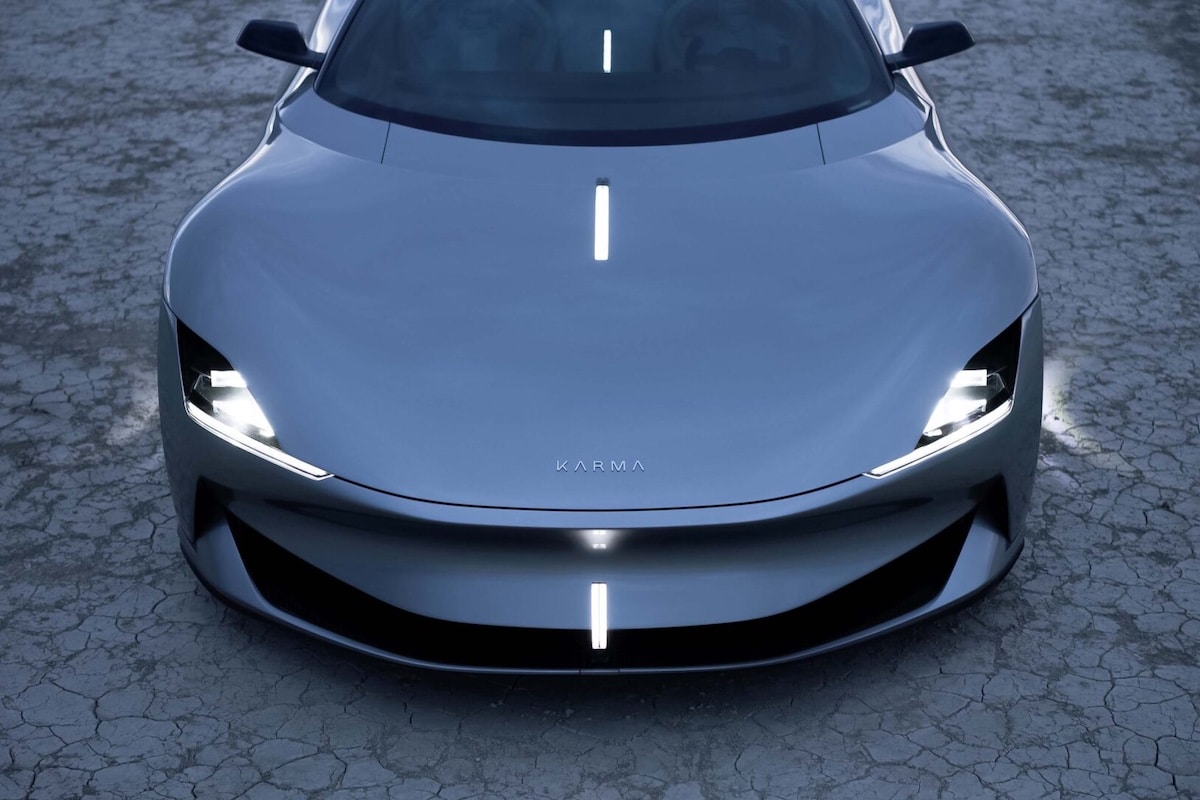
Between cascading bankruptcies and failed technological bets, Karma Automotive is still trying to escape an industrial fate that sticks to its chassis.
In the automotive world, some names bring luck while others seem to herald the opposite. Karma Automotive clearly belongs to the latter category. As the direct heir to Fisker Automotive, the California-based brand carries with it a decade of financial failures, restructurings, and unfulfilled promises. And yet, it persists, currently driven by a new hope: semi-solid batteries.

Returning to 2014, Fisker Automotive, creator of the spectacular Fisker Karma plug-in hybrid, filed for bankruptcy after a series of technical problems and disastrous financial management. Its assets were acquired by the Chinese group Wanxiang, which revived the business under the name Karma Automotive. However, the rebirth remains fragile: the Revero, a range-extended sedan derived from the original model, sells only in trickles despite a clearly asserted premium positioning.
Adding irony, Fisker Inc., Henrik Fisker’s second attempt in electric vehicles, would also face bankruptcy a decade later. Two companies, two major failures, and a shared unstable industrial legacy.
Announced disaster for Karma 2.0?
Today, Karma seeks to write a new chapter with the Kaveya, a 100% electric coupe scheduled for 2027, equipped with semi-solid batteries supplied by Factorial Energy. On paper, the technical specifications impress: over 1,000 horsepower, innovative architecture, stunning design. But the real signal lies elsewhere: the brand openly claims a strategy of image rather than volume.

And this is precisely where the problem lies. Relying on prestige and rarity can flatter a brand’s ego, but it also reveals a form of industrial deadlock. When only a few hundred cars are sold per year, how can a car company ensure its sustainability? The industry relies on amortizing development costs, logistics, and economies of scale—all three elements incompatible with nearly artisanal productions. The “technological laboratory” positioning may be appealing from a marketing standpoint, but it mainly highlights the chronic difficulty of finding a real market.
You might be interestedin this article:
Solid-state batteries might offer an image advantage or even a media splash. But without volumes, the technology alone is insufficient to build a sustainable economic base. Karma is therefore playing a delicate game: to become a pioneer without becoming a footnote again. Turning the page is necessary; the crucial part, however, is to sell cars to write the next one.
This page is translated from the original post "Karma : jamais une voiture n’a si mal porté son nom" in French.
We also suggestthese articles:
Also read
Recent articles