
Waymo is 9 Years Old but Still Not Autonomous

- Published on 13/12/2025 7:43
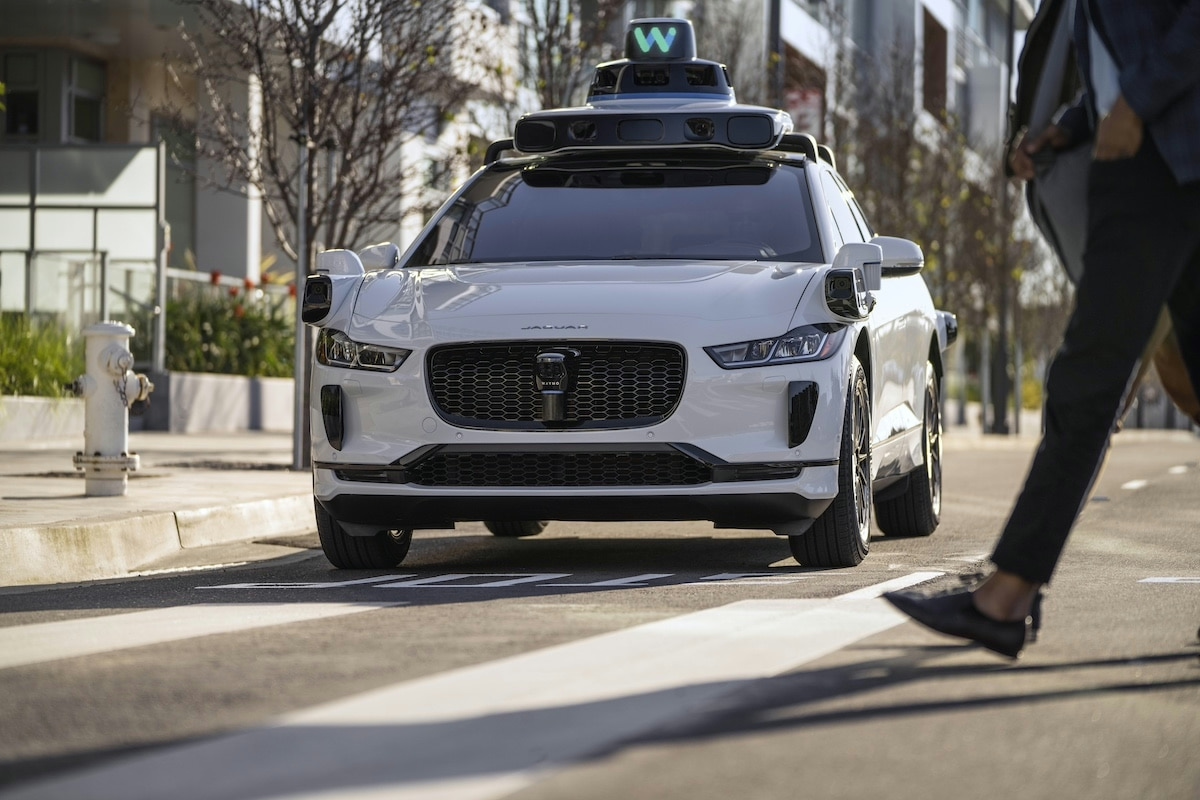
Waymo, Google’s autonomous vehicle subsidiary, is celebrating its ninth anniversary. It has been a long, complex, and very promising journey.
Since its official creation on December 13, 2016, Waymo has established itself as one of the world’s leaders in autonomous robotaxis, gradually transforming a laboratory technology into a real mobility service. However, nine years later, there is still no Waymo vehicle capable of moving autonomously in all conditions, everywhere. This is a perfectly rational evolution in light of the technological, regulatory, and societal challenges posed by autonomous driving.
What is clear today is that Waymo is no longer just a concept. The technology is already in action in several major U.S. cities. According to the latest figures, the company’s fleet of robotaxis is now completing around 450,000 paid rides per week, nearly double what it was doing six months ago. This rapid growth shows that public adoption is increasing and that the service is approaching operational large-scale autonomous mobility.
Waymo is already operating without a driver in cities like Phoenix, San Francisco, Los Angeles, Austin, Atlanta, Miami, Dallas, Houston, and San Antonio, and continues to expand its service areas each month. These expansions result from rigorous testing, local mapping phases, and progressive validations that reduce risks as the fleet grows.
Why is it taking so long?
Alongside this American expansion, Waymo is also preparing for its international launch, with plans to deploy driverless robotaxis in London and Tokyo by 2026, showcasing the company’s global ambition.
Unlike a software application that can be deployed quickly, an autonomous vehicle must analyze and respond to thousands of unique situations, from complex intersections to unpredictable pedestrian behaviors and varying weather conditions. Each new city requires testing, regulatory adjustments, and thorough safety validations. This involves years of data collection, simulation, fine-tuning artificial intelligence models, and real-world testing.
You might be interestedin this article:

Recent advancements, however, indicate that Waymo is getting closer to widespread autonomy, with services already operational in a dozen cities and thousands of daily users. It’s no longer a theory: autonomous mobility is becoming a tangible reality, step by step.
ALSO READ: Google’s Robotaxis are Coming to Europe
This page is translated from the original post "Waymo a 9 ans mais n’est toujours pas autonome" in French.
We also suggestthese articles:
Also read


Recent articles