24 Hours of Le Mans: The Chinese Offensive

- Published on 31/12/2025 10:14
- Modified on 07/01/2026 10:31
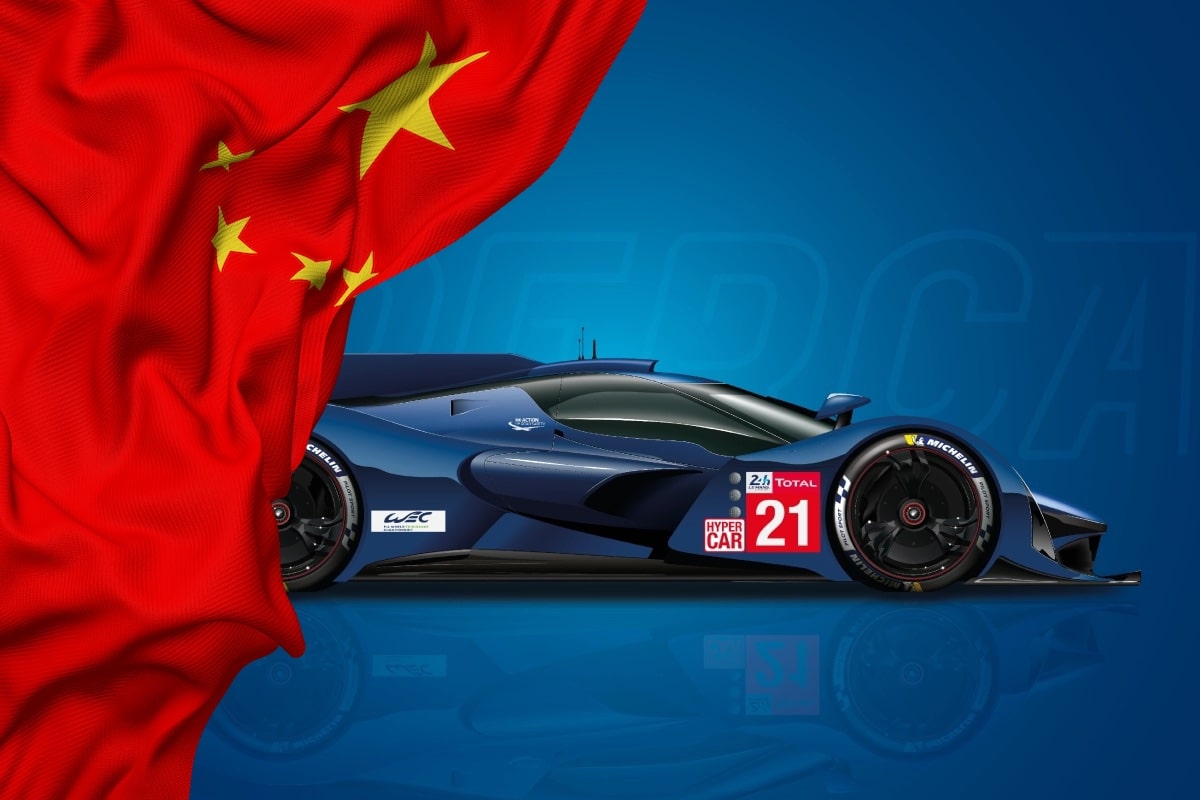
Chinese automotive giants are eyeing the circuits to transform their industrial power into legitimacy.
Long confined to its immense domestic market, the Chinese automotive industry has now reached a turning point. By 2025, China will be by far the world’s largest producer of vehicles, with over 30 million units produced in the year, exceeding the combined output of Europe and the United States. Domestic sales surpass 26 million vehicles, while exports hit a new record, around 5.5 to 6 million cars, according to the China Association of Automobile Manufacturers (CAAM), confirming the global offensive of Chinese manufacturers.
The dominance is even more striking in the field of New Energy Vehicles (NEV). In 2025, more than one in two new cars sold in China is electric or hybrid, with around 15 to 16 million units sold in the year. Globally, China accounts for over 60% of electric vehicle sales, imposing its industrial standards, volumes, and costs.
However, behind this raw power, the Chinese model remains fragile. A destructive price war, chronic overcapacity, plummeting margins, and massive dependence on public subsidies paint the picture of a giant with feet of clay, kept alive by state subsidies. In the domestic market alone, several dozen brands vie for a pie that is no longer growing. BYD, SAIC, Geely, Chery, Changan, and Great Wall are engaged in fierce competition, often at a loss, while many secondary players struggle for survival.
In this context, exporting is no longer a choice but a vital necessity. However, selling internationally is not just about offering technologically competitive or aggressively priced cars. One must also build an image, legitimacy, and desirability. And in this area, Chinese manufacturers start at a historical disadvantage.
Competition as a Credibility Accelerator
In the history of the automobile, competition has always served as a shortcut to recognition. The most striking example remains Ford at Le Mans in 1966. The American challenger against the European institutions represented by Ferrari and Porsche, Ford only needed 24 hours of racing to buy itself global sports legitimacy. An overwhelming victory that permanently changed the brand’s perception. Easy? No, but Ford was able to delegate the sporting part to Carroll Shelby’s structure and focus on financing the project and, above all, its media coverage!
This precedent resonates today with particular acuity for Chinese manufacturers. They too must prove, quickly, that they are capable of competing with historical references in their most sacred hunting ground: international automotive competition. The first step is endurance racing.
WEC and LMDh, a Historic Opportunity
Access to the highest level has never been more open than it is today. The LMDh regulation of the World Endurance Championship (FIA WEC), which includes the 24 Hours of Le Mans, offers an unexpected strategic window of opportunity. Unlike Formula 1, the ultra-exclusive technological pantheon, LMDh is based on a streamlined, managed, and financially relatively accessible customer model.
The manufacturer chooses a chassis homologated from one of the four designated specialists: ORECA, Dallara, Ligier, or Multimatic. The engine may be derived from a production block or purchased from a reputable engine manufacturer like Gibson, Cosworth, or Mecachrome, and the hybrid system is standardized. When it comes time to put the Hypercar on the track, it can be entrusted to an experienced operational structure: Signatech for Alpine, AF Corse for Ferrari, Penske for Porsche, or WRT for BMW. As you can see, a manufacturer without any sports division can go shopping to build their program 100%.
The Balance of Performance (BoP) finally levels the performances, giving each brand a credible chance of victory. An anathema for purists, but a major strategic lever for new entrants.
An Irresistible Economic Equation
Peugeot, Ferrari, and Toyota, which build their own cars according to the LMH regulations, have budgets that can exceed 50 million euros annually. But thanks to the regulations, for about 30 million euros per season, a manufacturer can today secure exceptional global visibility and aim for victory in mythical events like the 12 Hours of Sebring, the 24 Hours of Daytona, or of course, the 24 Hours of Le Mans. In comparison, a Formula 1 season is capped at 200 million euros but requires very heavy industrial investments to design and produce a chassis. One must therefore count nearly 500 million euros for top teams. This is an unattainable horizon in the short term for Chinese manufacturers who do not even have the necessary infrastructure, while the urgency is to forge a prestigious image without delay.
A significant investment, but one that does not take into account the contributions of sponsorship. It is plausible that major Chinese brands will be interested in this media exposure, and that financing a season should not pose too many problems. These figures are especially to be compared with the annual communication and marketing budgets of manufacturers like BYD and SAIC, which exceed 4 billion yuan in 2025 (Source Statista 2025), nearly half a billion euros!
China on the Brink of a High-Speed Turn
It is therefore no coincidence that Geely with Lynk & Co and Chery with Exeed are no longer hiding their intention to participate in the 24 Hours of Le Mans in the next five years. Two groups that are among the heavyweights of the Chinese market, but are still seeking real global legitimacy. Lynk & Co has been a major player in the World Touring Car Championship for years, but outside a circle of insiders aware of this? To become known and recognized, the aim must be higher, faster, stronger. The example of Genesis is illuminating in this respect. The premium brand of the South Korean group Hyundai will participate in WEC starting in 2026. The manufacturer has trained this season in the LMP2 category with the support of the French structure IDEC, but will proudly compete next season in the top category under the South Korean banner. A French ORECA chassis, the current reference, a turbo V8 engine, assembled from two blocks of the successful four-cylinder Hyundai in the World Rally Championship WRC, and six top-tier drivers including our three “Top Gun” Frenchmen Paul-Loup Chatin (ex-Alpine), Mathieu Jaminet (ex-Porsche), and Mathys Jaubert. A striking demonstration of how an Asian manufacturer can use endurance racing to establish its premium status and compete with European references. Other Chinese giants are surely watching closely, aware that remaining absent from this scene would leave the field open to their competitors.
Le Mans as a Revealer
For Chinese manufacturers, endurance racing is therefore not a mere sporting whim. It is a strategic tool, a credibility accelerator, and a short-term image investment. Le Mans remains a universal judge, a stage where legends are forged and where decades of recognition can be won, sometimes in a single race.
You might be interestedin this article:
In 24 Hours, Ford changed its destiny. In 2025, as China dominates the global automotive landscape through volumes, technology, and exports, it is only missing one thing: a symbolic victory on the international sports scene. Le Mans offers this shortcut, but it must always be remembered that Le Mans chooses its winner. Now the question remains, who will be the first to dare to challenge the legend… and who will succeed in transforming industrial power into eternal legitimacy.
ALSO READ: Lynk & Co first Chinese manufacturer at the 24 Hours of Le Mans?
This page is translated from the original post "24 Heures du Mans : l’offensive chinoise" in French.
We also suggestthese articles:
Also read
Recent articles