Stellantis and Bolt Go All-In on Driverless Ridesharing

- Published on 09/12/2025 12:12
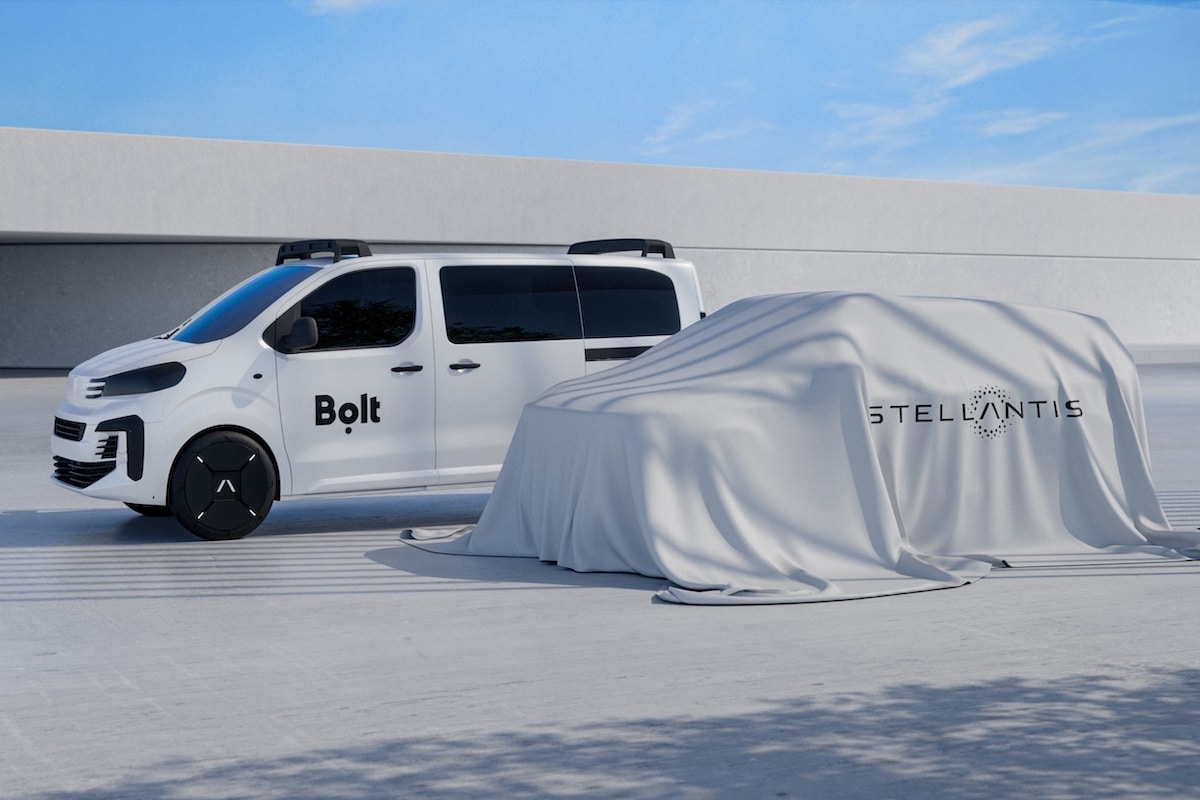
A strategic partnership aims for the gradual deployment of driverless transportation services starting in 2026.
Stellantis and Bolt have announced a partnership aimed at developing and deploying level 4 autonomous vehicles, thus without human drivers, in Europe. This collaboration relies on the automotive group’s “AV-Ready” technical platforms, designed to natively integrate the technologies necessary for fully autonomous driving.
The agreement includes the use of Ek0 architectures, dedicated to medium-sized commercial vehicles, as well as the STLA Small platform, oriented towards compact vehicles. These technical bases integrate advanced sensors, high-performance computing systems, and redundancy devices aimed at ensuring a high level of operational safety. The goal is to provide vehicles capable of operating without a driver in complex urban environments, while meeting European safety and cybersecurity requirements.
Bolt knows the business
Bolt, already present in over 50 countries through its ride-hailing and shared mobility services, plans to integrate these autonomous vehicles directly into its platform. Ultimately, the company’s ambition is to build a fleet of 100,000 autonomous vehicles by 2035, in order to reduce operational costs and improve the accessibility of on-demand transportation services.
The announced timeline includes the launch of the first real-world tests in several European countries starting in 2026. These tests will follow a gradual approach, beginning with prototypes and pilot fleets before ramping up to industrial scale production. A first phase of production is planned for around 2029, subject to necessary regulatory approvals.
Both partners have indicated they are working in coordination with national and European authorities to ensure strict compliance with existing standards, particularly regarding road safety, data protection, and resilience against cyber threats.
You might be interestedin this article:
For Stellantis, this project is part of a long-term strategy aimed at structuring an industrial ecosystem around autonomous driving in Europe. For Bolt, it constitutes a major lever in transforming its business model towards fully automated mobility services.
ALSO READ: What do taxis and ride-hailing services have to lose with the emergence of Robotaxis?
This page is translated from the original post "Stellantis et Bolt à fond sur le VTC sans conducteur" in French.
We also suggestthese articles:
Also read


Recent articles