
50 Years of Automotive Innovations Driven by Motorsports

- Published on 21/02/2026 8:02
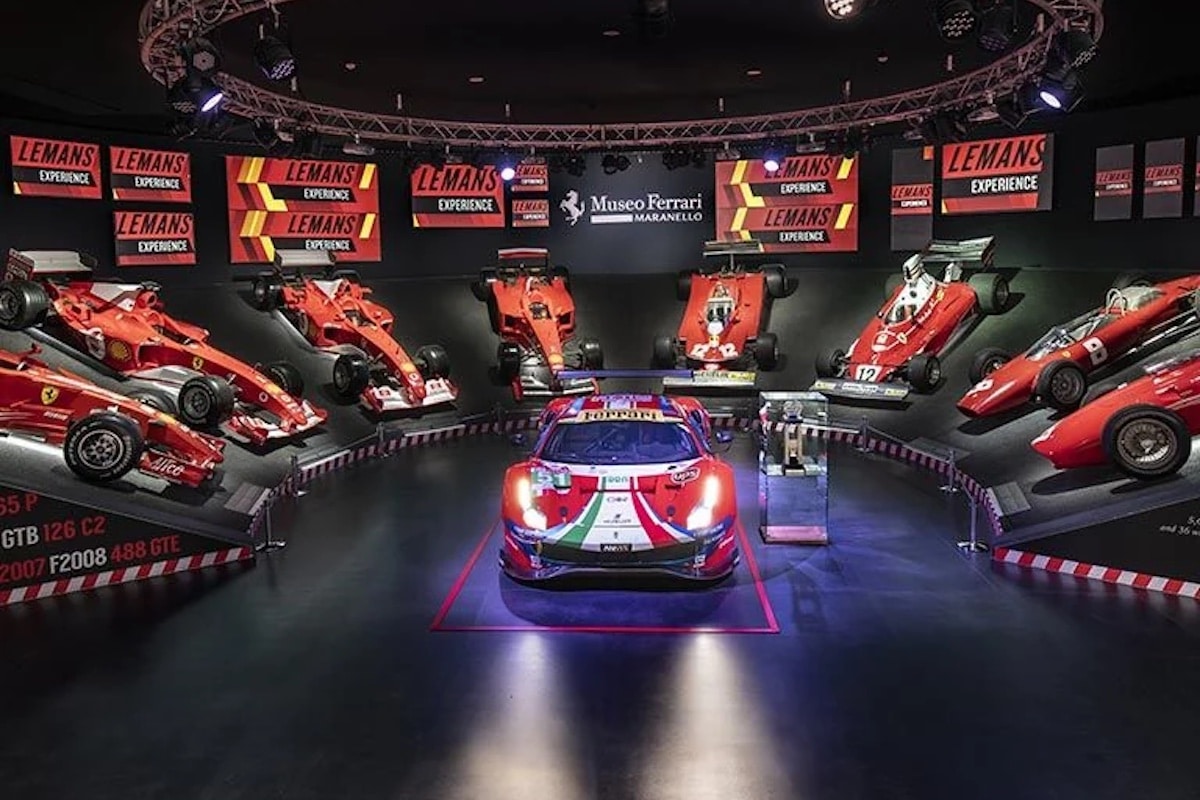
For more than half a century, motorsport has acted as a powerful accelerator of technological innovations.
The technologies tested in competition eventually find their way into our production cars. Safety, hybrid engines, aerodynamics, composite materials, and braking systems: motorsport shapes modern automobiles far beyond mere spectacle.
Engines, Hybridization, and Transmissions: Efficiency First
The quest for performance has gradually evolved into a search for energy efficiency. Turbocharging, electronic fuel injection, advanced engine management, kinetic energy recovery, and hybridization all find their roots in competition, particularly in Formula 1 and endurance racing.
A major turning point occurred in 1989 with the Ferrari 640, designed by John Barnard: it introduced the semi-automatic paddle-shift transmission. This innovation revolutionized gear changes, reduced today to just a few milliseconds in F1. The elimination of the clutch pedal then paved the way for robotized transmissions and the dual-clutch transmission (DCT), now widespread in sports cars and mainstream models. The result: faster gear shifts, optimal torque continuity, and controlled fuel consumption.
Aerodynamics: From Track to Road
Automotive aerodynamics is one of the most visible legacies of competition. As early as 1977, the Lotus 78 revolutionized the discipline with ground effect, exploiting the vacuum under the car to generate downforce without penalizing top speed.
Today, city cars benefit from these advancements: partial flat underbodies, active air vents, optimized airflow, and reduced turbulence. Numerical simulations and wind tunnels, perfected in racing, help improve stability, reduce fuel consumption, and lower CO2 emissions.
Composite Materials: The Carbon Revolution
In 1981, the McLaren MP4/1 introduced the carbon fiber monocoque in Formula 1. Lighter and stronger than aluminum, it has permanently transformed automotive design.
Today, carbon fiber is found in supercars and premium models, while bonded aluminum, magnesium, and ultra-high-strength steels optimize the weight-to-stiffness ratio. A major advantage for performance, safety, and emissions reduction.
Braking and Safety: Saving Lives
Carbon-carbon brakes, developed in competition by specialists like Carbone Industrie, inspired the carbon-ceramic brakes of high-end cars. Increased endurance, optimized thermal dissipation, and reduced unsprung masses: benefits directly inherited from the racetracks.
On the safety front, advancements from competition have profoundly transformed production cars. The HANS system, made mandatory after several dramatic accidents, effectively protects the head and neck during violent impacts. In Formula 1, the introduction of the Halo in 2018 marked another major milestone: this titanium structure capable of supporting several tons of load protects the cockpit from debris and direct impacts.
Meanwhile, deformable structures—refined with crash boxes and tubular or carbon survival cells—have inspired the programmed deformation zones of our modern cars. These architectures absorb the energy of a collision before it reaches the cabin, significantly improving occupant protection. Roll cages, anti-explosion flexible tanks, airbags, and seatbelts with pretensioners all find their roots in fifty years of competition experimentation.
A Permanent Technology Laboratory
Motorsport remains an open-air laboratory. Extreme constraints accelerate innovation and quickly validate technological solutions that might take years to emerge in traditional industry.
You might be interestedin this article:
Sustainable fuels, advanced hybridization, recycled materials, and enhanced safety will guide the coming decades. One constant remains: behind every advancement in our road cars often lies an idea born on a racetrack.
ALSO READ: Stéphane Bern presents 100 years of passion and innovation at the 24 Hours of Le Mans (Video)
This page is translated from the original post "50 ans d’innovations automobiles grâce au sport automobile" in French.
We also suggestthese articles:
Also read

Recent articles