Île-de-France Transport 2025: A High Price for Satisfaction

- Published on 25/11/2025 19:55
- Modified on 26/11/2025 10:43
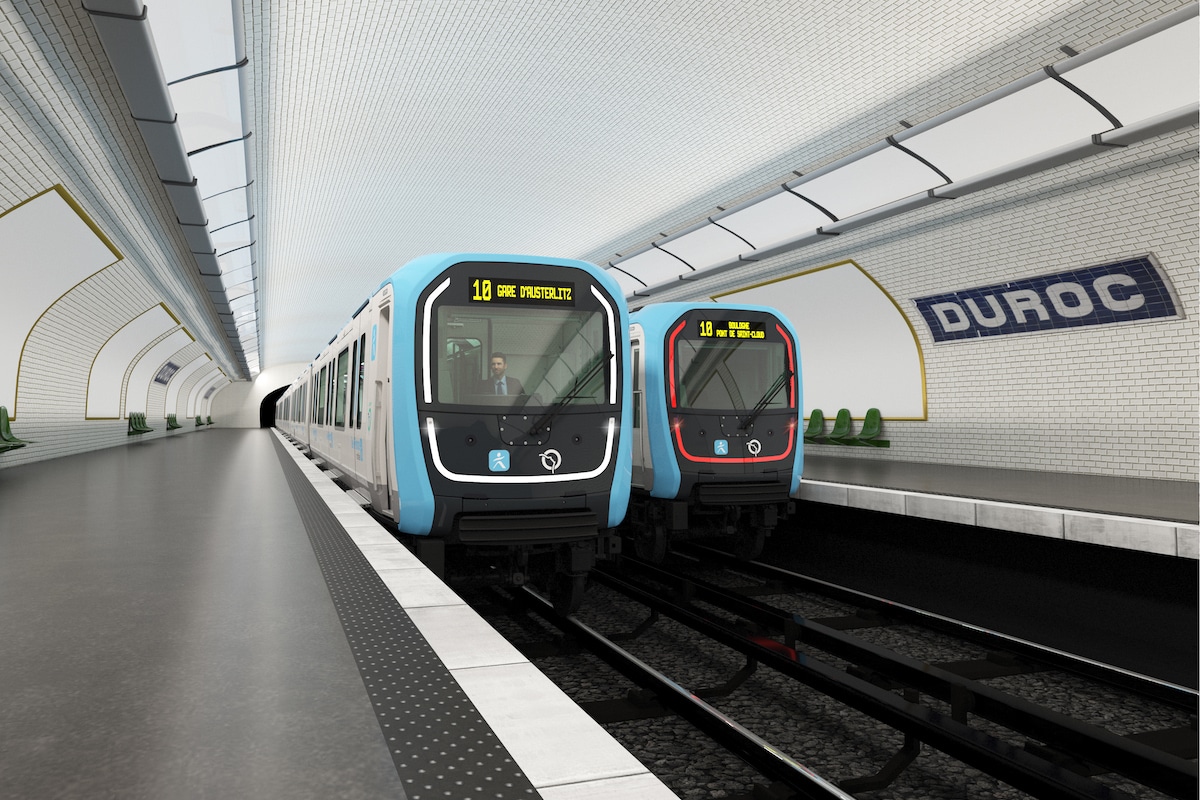
In a study dated November 2025, Île-de-France Mobilités proudly announced: 71% of residents in Île-de-France are satisfied with their transportation.
7 out of 10 travelers are reportedly happy. This figure is highlighted emphatically in a survey by Ipsos BVA commissioned by the organizing authority, Île-de-France Mobilités. But behind this optimistic communication, one question remains: at more than €2.50 for a single ticket and with a Navigo Pass among the most expensive in Europe, are customers not paying precisely to obtain a quality service?

Beyond the statistical gloss, the analysis reveals a more nuanced reality. 71% satisfaction is certainly commendable, but the pricing context tempers the enthusiasm. The fact that more than seven residents of Île-de-France claim to be satisfied is not trivial. The network has emerged from several complex years marked by construction, rolling stock renewal, and punctuality crises.
However, presented this way, the result almost gives the impression that users express a form of gratitude, while they are using one of the most expensive transportation systems in the country, funded by a Navigo subscription of over €85 per month after several successive increases. One could also see the glass as half empty, as a third of respondents feel disappointed…

You might be interestedin this article:

Unequal investments depending on the lines
Île-de-France Mobilités cites 1,400 new or renovated trains, subways, trams, and RER lines since 2016. And it is true that some progress is evident, such as the arrival of the Francilien and Regio 2N trains, which have genuinely modernized several Transilien lines. The new RER NG marks a breakthrough in comfort, while trams, favored by 85%, confirm their status as the preferred mode of transport.
However, the overall satisfaction masks significant disparities. The RER B and D, for example, continue to accumulate delays, cancellations, and capacity issues. And while the organizing authority highlights progress, travelers judge each morning at the stations, not in Excel spreadsheets.

Two-thirds of residents in Île-de-France believe that the situation has improved since 2019. Again, an encouraging figure that must be placed in context: 2019 was one of the worst years for punctuality and network availability, not to mention the massive strikes that followed. Afterward came Covid-19 and the diversion of many travelers to individual modes of transportation like bicycles, to avoid contact with other users in a confined and dirty space.
Cleanliness, security: sensitive blind spots
The survey reveals shadow areas:
• Cleanliness: A third of users note an improvement, but a quarter instead reports a deterioration. Renovated trains do not always compensate for the condition of certain stations, especially in the evening.
• Security: Responses are divided into three equivalent blocks: positive, neutral, negative. Despite the €300 million invested annually, the 80,000 cameras, and the 3,000 mentioned agents, the feeling of insecurity remains a major barrier, particularly for nighttime journeys or at connection hubs.

The dematerialization of tickets – purchasing on smartphones, Liberté+, unique digital ticket – seems to be appreciated: 62% of residents in Île-de-France view these developments positively. Another revealing element: the Île-de-France Mobilités app has become the second most used mobility app, just behind Google Maps. Here too, the effort is real, even though many users lament the persistent gaps between theoretical schedules and actual conditions on the ground.
Ultimately, the region’s transport authority delivers a study in the form of a commendation that is still very far from a satisfaction rate of 95% as seen in Japan.
ALSO READ: Transportation in Île-de-France: what changes on January 1, 2025
This page is translated from the original post "Transports franciliens 2025 : un satisfecit facturé au prix fort" in French.
We also suggestthese articles:
Also read
Recent articles