
89 Years Ago, Hughes Shattered Transcontinental Sky

- Published on 19/01/2026 13:01
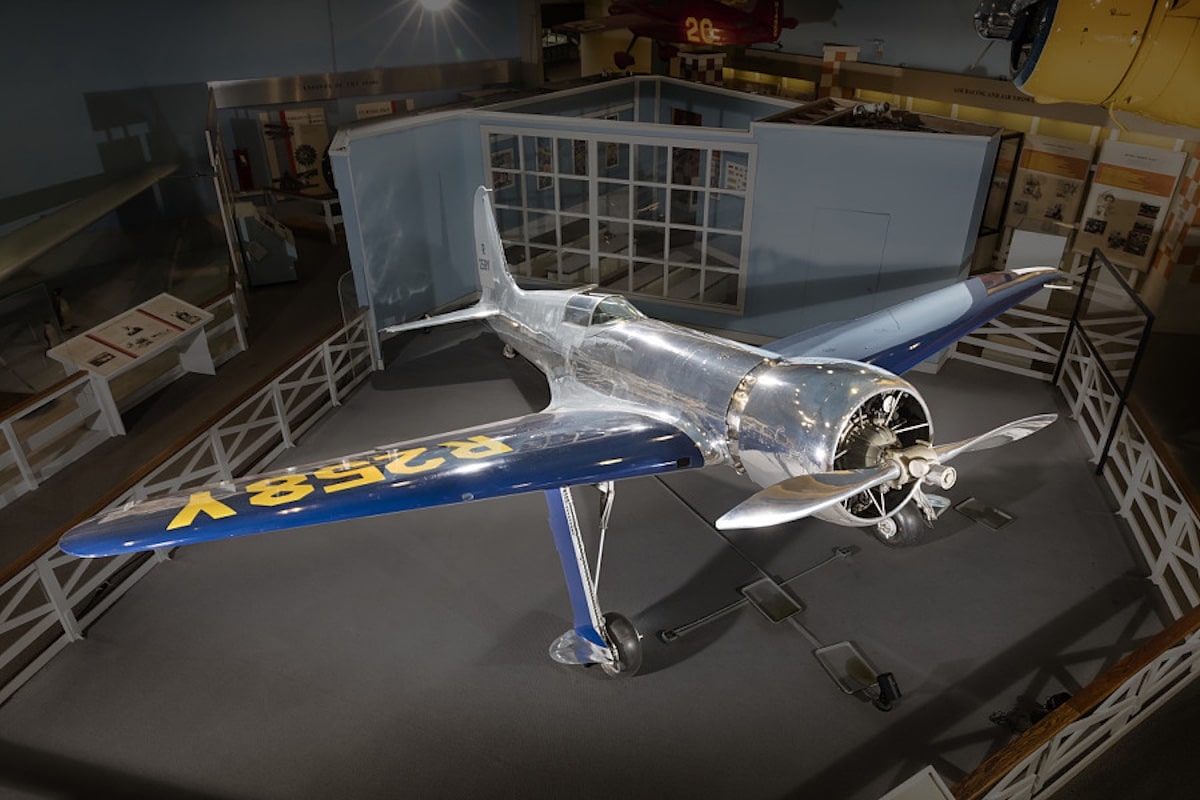
On January 19, 1937, Howard Hughes set a historic transcontinental flight record aboard his H-1 Racer.
Howard Hughes, a visionary in aviation and a Hollywood mogul, embodies boldness and innovation. A self-taught engineer, exceptional pilot, and obsessive perfectionist, he revolutionized the standards of his time. His thirst for speed led him to design the Hughes H-1 Racer, a plane built to break records, and to make aviation history on January 19, 1937.
Faster, further
Before this legendary flight, in 1935, Hughes had already made waves by setting a land speed record for a single-seat airplane at 352 mph (≈ 566 km/h) on a closed course. This success foreshadowed the transcontinental flight that would launch him into legend.
On January 19, 1937, Hughes took off in the early hours of the morning from Burbank, California, in his optimized H-1 with extended wings and additional fuel tanks. After 7 hours, 28 minutes, and 25 seconds, he touched down in Newark, New Jersey, covering about 2,490 miles at an average speed of 322 mph (≈ 518 km/h). This impressive feat demonstrates that, even without the support of a major firm, an individual could push the boundaries of aviation.
You might be interestedin this article:

Yet, Hughes’s life was not always so brilliant. Obsessed with perfection and solitude, he spent his later years reclusive, suffering from obsessive disorders and social isolation, before passing away in 1976 in Houston, leaving a legacy that is both fascinating and mysterious.
READ ALSO: 122 years ago, the Wright brothers left the Earth
This page is translated from the original post "Il y a 89 ans, Hughes pulvérisait le ciel transcontinental" in French.
We also suggestthese articles:
Also read


Recent articles