
The global automotive balance shifts

- Published on 27/04/2026 6:49
- Modified on 27/04/2026 6:54
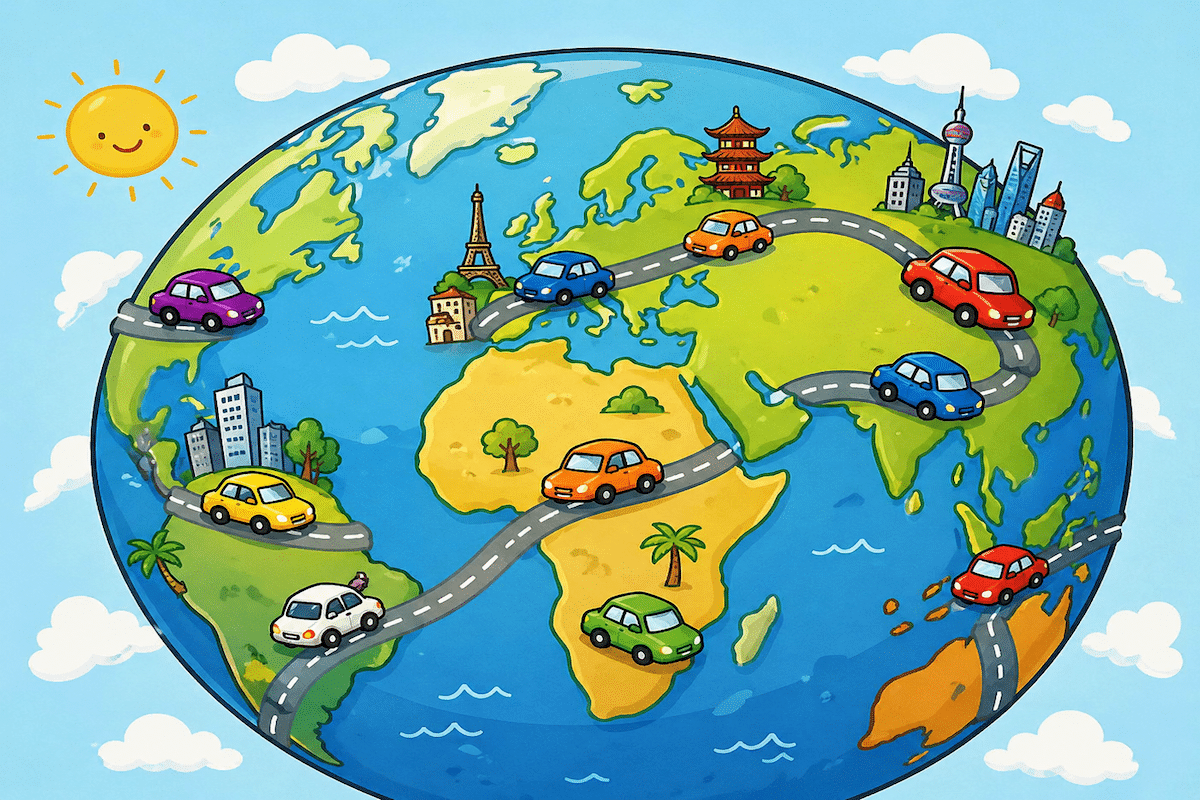
Driven by Asia, global automotive growth is profoundly reshaping the industry’s landscape.
By 2025, the global automotive industry has regained momentum. According to data from the International Organization of Motor Vehicle Manufacturers (OICA), presented notably at the Beijing Auto Show 2026, production reached 96.4 million vehicles (+3.9%) and sales reached 99.8 million units (+4.7%). Strong results, but they mask a much deeper transformation: growth is no longer uniform; it has shifted.
The center of gravity of the global automotive sector is now tilting towards Asia. The region represents over 61% of global production, with 59.2 million vehicles (+7.6%). China is the clear leader, fueled by the rapid rise of new energy vehicles. India is confirming its rise, while Japan remains a crucial industrial base. In short, the global dynamic is now Asian.
Europe bends but does not break
In the face of this acceleration, Europe is stagnating. Production is slightly down (-0.8%) and sales are stagnant (-0.4%). Behind these numbers lies a complex transition: electrification under pressure, high energy costs, and uneven industrial transformation. The continent struggles to maintain its rank in an increasingly competitive environment.
The Americas illustrate another imbalance: sales are rising (+2.9%), but production is declining (-2.1%). This gap reflects ongoing tensions between trade policies, supply chains, and industrial relocation strategies.
Even Africa, still marginal, shows rapid growth, evidence that restructuring is global.
You might be interestedin this article:
More than a recovery, 2025 marks a turning point. The global automotive industry is changing its center of gravity, along with its balances. A silent but decisive shift.
This page is translated from the original post "L’équilibre automobile mondial bascule" in French.
We also suggestthese articles:
Also read

Recent articles