
The Fabulous Story of the Polish Fiat

- Published on 22/12/2025 8:03
- Modified on 22/12/2025 8:08
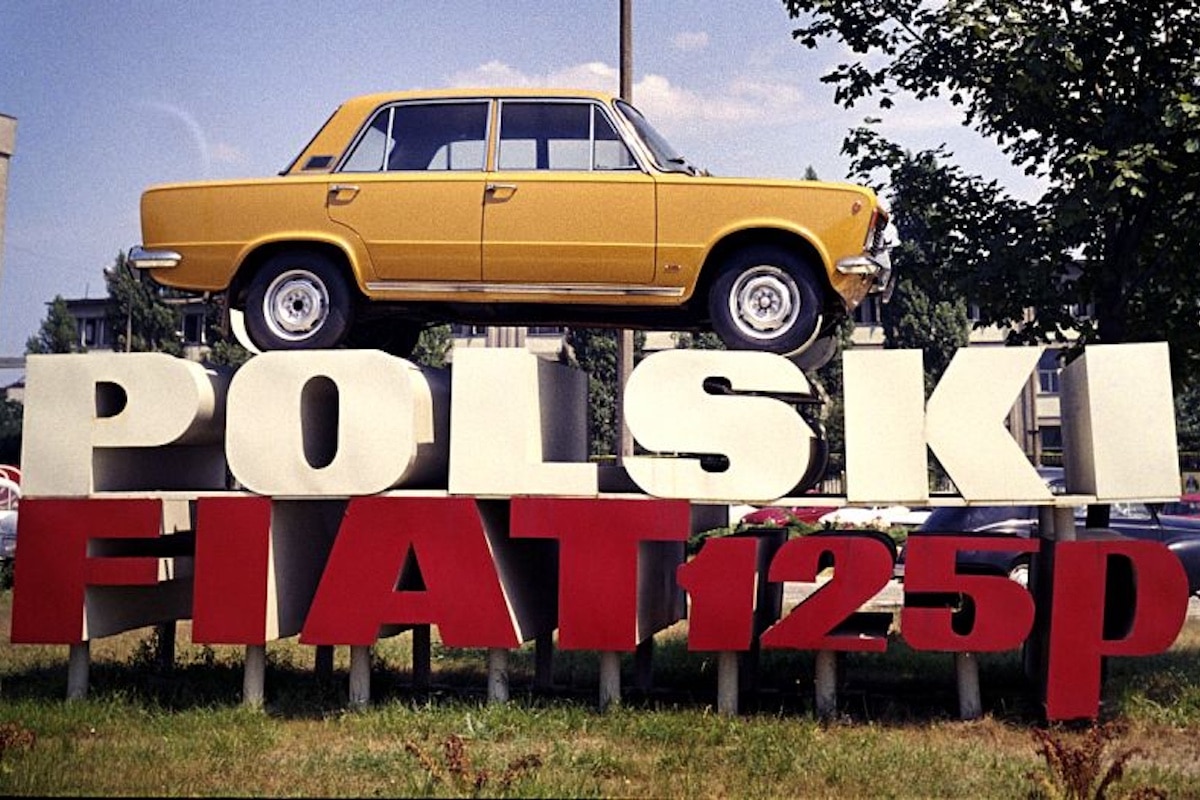
At the heart of the Cold War, a Fiat became more than a mobility object; it became an economic and diplomatic tool.
The agreement signed between Fiat and FSO (Fabryka Samochodów Osobowych) perfectly illustrates this reality, blending industrial ambitions, political stakes, and the desire for popular motorization in Eastern Europe.
Founded in 1951 in Warsaw, FSO is tasked with producing the Polish people’s car. In a country marked by post-war reconstruction and integrated into the Soviet bloc, the automotive industry is still in its infancy. The first models, such as the Warszawa derived from the Soviet Pobeda, are sturdy but technologically outdated. Very quickly, Polish authorities seek a solution to modernize their production without possessing the necessary know-how.
It is in this context that Fiat intervenes, a symbol of Italian industrial capitalism, but also a pragmatic partner. In 1965, an agreement is signed between Fiat and Poland for the licensed production of Italian models. This rapprochement is strategic: for Poland, it is about accessing modern technology; for Fiat, it is about penetrating Eastern markets without direct ideological confrontation.
A true people’s car
The agreement leads to the production of the Fiat 125p, assembled by FSO starting in 1967. While its body resembles the Western Fiat 125, its mechanics are intentionally simplified to meet local constraints and the quality of available fuels. The 125p quickly becomes an emblematic car, used by both administrations and individuals, and exported to several countries in the Eastern bloc.
In the 1970s, FSO also launches the Fiat 126p, a small economical car intended for Polish households. Affectionately nicknamed “Maluch” – meaning “little” in Polish – and sometimes referred to as “Lause” in popular language, this car becomes a symbol of accessible mobility. Its tiny size and simplicity make it a true cultural phenomenon, motorizing a whole generation and leaving a lasting mark on the Polish urban landscape.
You might be interestedin this article:
Beyond the models produced, the Fiat-FSO agreement marks a key turning point: it proves that industrial cooperation between East and West is possible, even during the Cold War. For Poland, it represents a decisive technological leap; for Fiat, it is a lever of influence and growth. An automotive alliance that has, over time, become a discreet yet enduring symbol of European history.
Image credit: TVP3-PAP/Janusz Rosikoń
ALSO READ: Poland launches an XXL Ecological Bonus
This page is translated from the original post "La fabuleuse histoire de la Fiat polonaise" in French.
We also suggestthese articles:
Also read


Recent articles