Stellantis and the risky bet of one for all

- Published on 21/05/2026 16:24
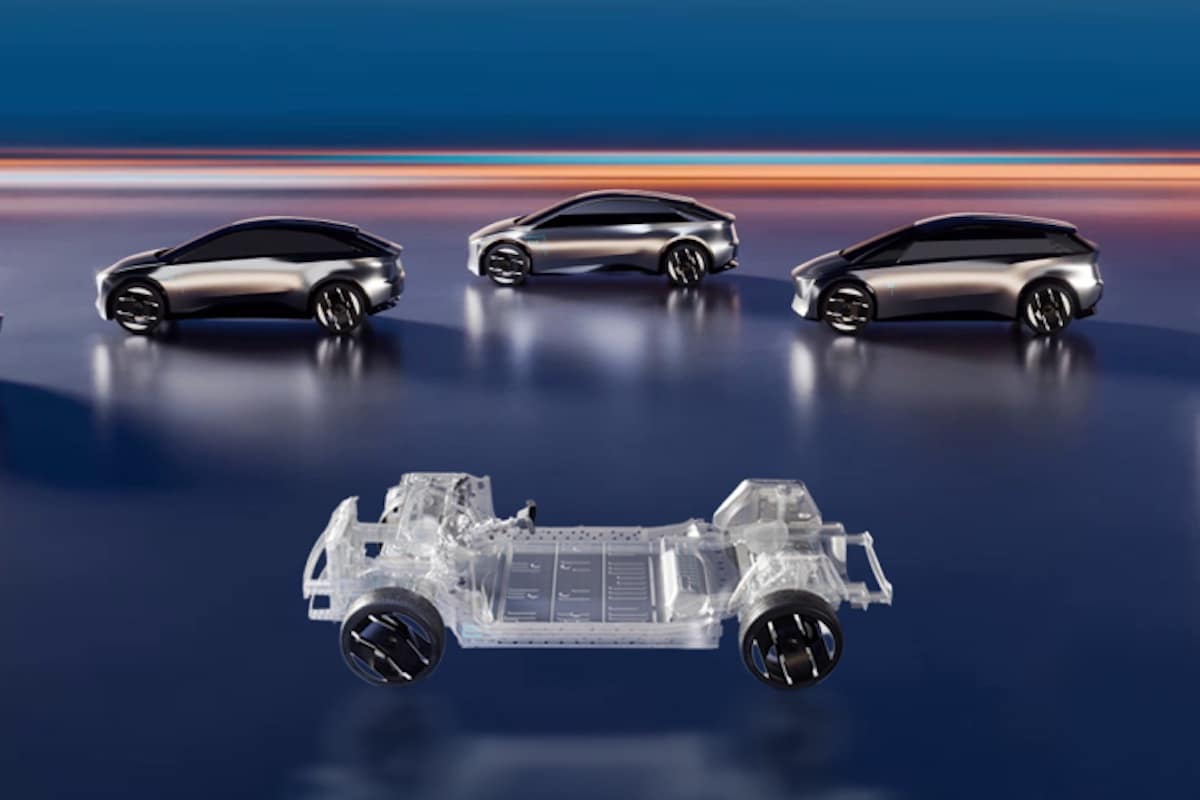
With STLA One, Stellantis aims to radically simplify its technical architectures to produce more vehicles at a lower cost.
With STLA One, Stellantis is not just presenting a new technical platform: the group is attempting to address one of the structural issues faced by historical manufacturers, namely the dispersion of platforms, components, and electronic architectures. The goal is clear: to produce more models with fewer technical variants, thereby reducing development, industrialization, procurement, and maintenance costs.
The context is important. Stellantis has also just announced a €60 billion plan by 2030, including 60 new models, €24 billion dedicated to platforms, powertrains and technologies, as well as a target of €6 billion in annual savings by 2028.
Why STLA One can reduce production costs
The main lever is intelligent standardization. By grouping five platforms within a unique architecture, Stellantis can share anchor points, wiring harnesses, electronic modules, rolling stocks, battery interfaces, and software.
The logic is reminiscent of that already initiated on existing STLA platforms: reducing industrial complexity while increasing economies of scale. With an announced target of over two million units by 2035 and more than 30 compatible models, STLA One potentially becomes the future industrial backbone of the group.
The coverage of segments B, C, and D constitutes another key element. City cars, compacts, SUVs, and sedans will be able to share a common base, which mechanically reduces the number of specific parts, tooling, and technical validations.
Another strategic focus is on batteries. Increasing the use of LFP (lithium iron phosphate) cells aligns with the logic of cost reduction and less dependence on critical raw materials like nickel or cobalt. The “cell-to-body” integration, which makes the battery a structural element of the vehicle, is also expected to decrease weight, the number of components, and assembly operations.
A potential reduction in maintenance costs
In terms of after-sales, STLA One can also generate significant gains. The integration of STLA Brain and STLA SmartCockpit will allow for a more homogeneous electronic architecture, with standardized diagnostics, OTA (over-the-air) updates, and potentially faster workshop interventions. This approach brings Stellantis closer to the model adopted by Tesla or some Chinese manufacturers. The pooling of parts may also reduce the cost of after-sales stock and simplify maintenance in European networks.
However, this logic also has limits. A structural battery improves industrial efficiency but may complicate certain repairs after a collision. The same question arises around steer-by-wire: fewer traditional mechanical components, but greater dependence on software, controllers, and redundant systems.
A direct response to Tesla and Chinese manufacturers
With STLA One, Stellantis is accelerating its transition to a more integrated model, inspired by new electric vehicle players. The group is clearly looking to narrow the gap with market leaders in terms of manufacturing costs, development speed, and software architecture. The 800-volt compatibility, LFP battery strategy, and software-hardware integration all align with this goal.
The target operating margin of 20% remains ambitious, however. It will heavily depend on the manufacturer’s ability to maintain high volumes, secure its battery supplies, and successfully achieve large-scale software integration.
You might be interestedin this article:
STLA One could become one of Stellantis’s most significant industrial projects since the group’s formation. If the platform delivers on its promises, it will enable the production of more models with less complexity while progressively reducing production and some maintenance costs. If it fails, billions of euros will be lost.
The challenge will also be to preserve the identity of the different brands within the group – Peugeot, Citroën, Opel, Fiat, Jeep, or DS – despite a common technical base.
ALSO READ: Stellantis invents the European Kei car
This page is translated from the original post "Stellantis et le pari risqué d’une pour toutes" in French.
We also suggestthese articles:
Also read

Recent articles