Hyundai MobED, the robot that could redefine autonomous mobility

- Published on 03/12/2025 11:59
- Modified on 03/12/2025 13:02
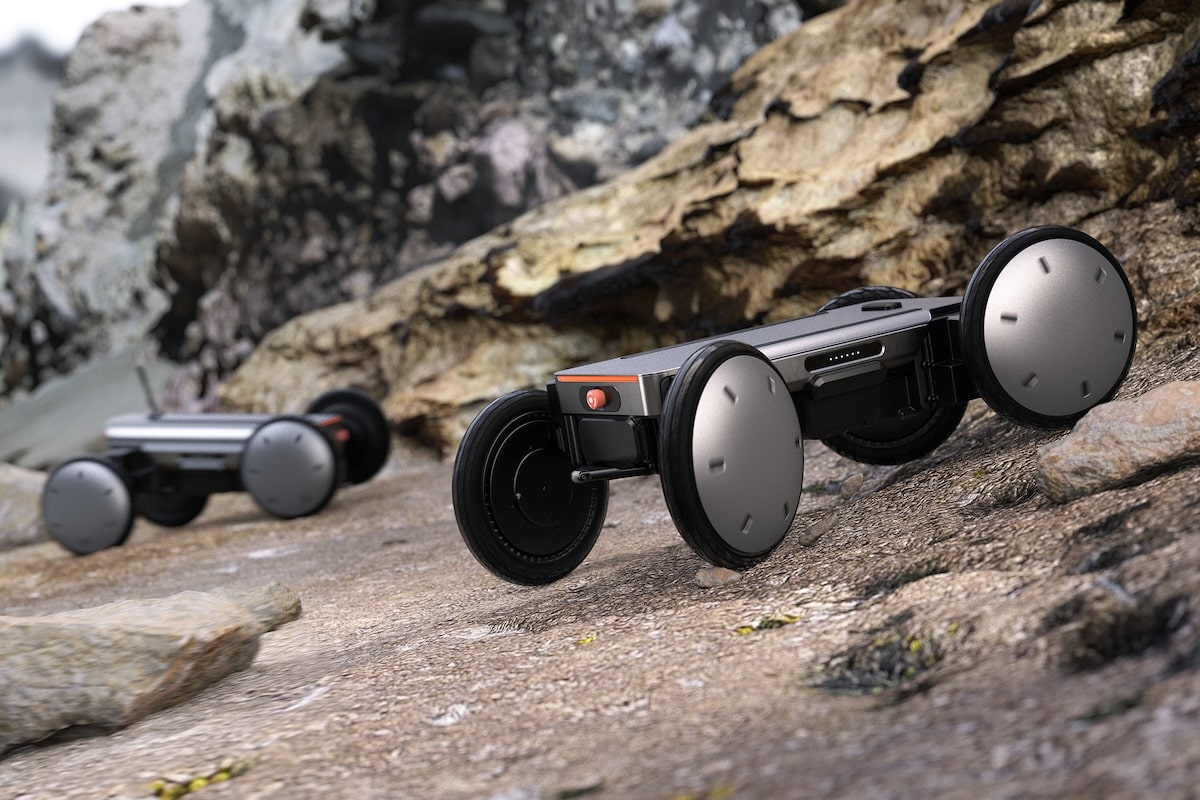
With MobED, unveiled in its production version at the iREX 2025 in Tokyo, Hyundai Motor Group is not just presenting a new robot.
The South Korean manufacturer offers a completely different way to envision mobile robotics, blending automotive engineering, artificial intelligence, and modularity to a level rarely achieved in this field.
While service robotics is still fumbling, MobED appears as one of the first products genuinely capable of transitioning from demonstration to daily use, from prototype to reality.
Born in 2022 as a concept presented at CES, MobED has since been profoundly rethought to become a ready-to-produce autonomous mobility platform. What strikes first is its ability to move with surprising ease: thanks to a completely novel off-center mechanism and modules integrating driving, steering, and posture management, the robot stabilizes and instantly adapts to all unevenness of the ground.
An unprecedented autonomy of movement

Where most robots require controlled environments, MobED operates equally well in a narrow corridor as it does outdoors, on uneven or inclined ground. Hyundai translates the rigor of the automobile to robotics: robustness, safety, and the ability to face real-life challenges.
You might be interestedin this article:
This mechanical ease is accompanied by a truly accessible autonomy, designed to be used by the greatest number. The control interface, simple and visual, requires no technical expertise, while navigation relies on a fusion of LiDAR and cameras with predictive algorithms capable of avoiding obstacles and orienting in the most congested environments.
There is a determination at Hyundai to democratize mobility robotics, making it manipulable like a consumer electronic device rather than industrial equipment. However, it is undoubtedly in terms of modularity that MobED reveals its full potential. Designed as a universal platform rather than a specialized robot, it can become alternately a logistics tool, delivery robot, stabilized filming support, assistant for scientific research, or mobility platform for people with reduced mobility.
Affordable and handy “personal assistants”

Universal rails, open API, indoor/outdoor compatibility: everything is designed so that other players (startups, laboratories, public services, or large companies) can build their own uses based on the robot. Hyundai is therefore not just manufacturing a product, but a potential standard for a new generation of versatile robots.
The simultaneous arrival of two versions, MobED Pro and MobED Basic, confirms this long-term strategy. The Pro, equipped with complete autonomy and advanced perception, targets immediate professional uses, particularly outdoors or in complex environments. The Basic, deliberately more stripped down, is intended for research, innovation, and the creation of new applications. This opens the door to an ecosystem that could grow exponentially, similar to what happened with mobile platforms in computing or modular chassis in electric vehicles.

Ultimately, MobED is not just another robot in a market saturated with prototypes and gadgets. It may mark the beginning of a new era, where mobile robotics finally frees itself from the constraints that have hindered it for years: dependence on the environment, lack of versatility, and difficulty in industrialization. If Hyundai manages to build an ecosystem around this platform, MobED could become one of the few robots capable of enduringly influencing how we will transport, deliver, film, or assist in the future. A robot, yes, but above all a promise: that of truly universal autonomous mobility.
ALSO READ: Maeve Jet, the future hybrid electric regional aircraft… with propellers
This page is translated from the original post "Hyundai MobED, le robot qui pourrait redéfinir la mobilité autonome" in French.
We also suggestthese articles:
Also read

Recent articles